A Helpful Guide to Why You Should Schedule Regular Lift Inspections
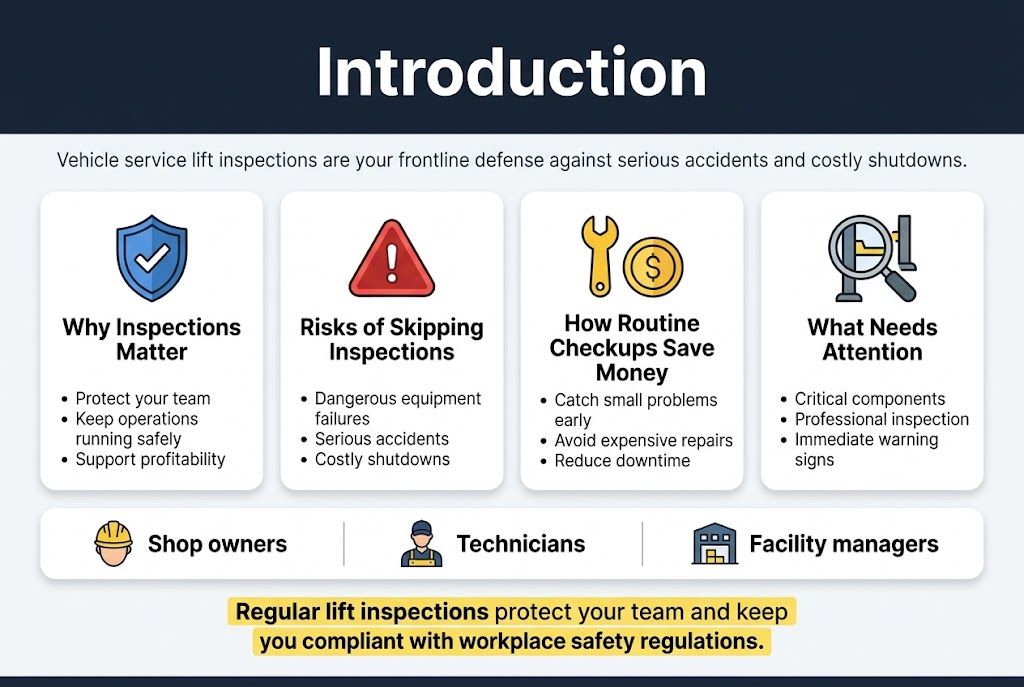
Vehicle service lift inspections aren't just paperwork—they're your frontline defense against serious accidents and costly shutdowns. This guide is for shop owners, technicians, and facility managers who rely on lifts daily to keep their operations running safely and profitably.
Regular lift inspections protect your team from dangerous equipment failures while keeping you compliant with workplace safety regulations. We'll walk through the major safety risks that come with skipping inspections and show you how routine checkups actually save money by catching small problems before they become expensive repairs. You'll also learn which critical components need professional attention and how to spot the warning signs that mean your lift needs immediate inspection.
Safety Hazards of Un-Inspected Vehicle Service Lifts
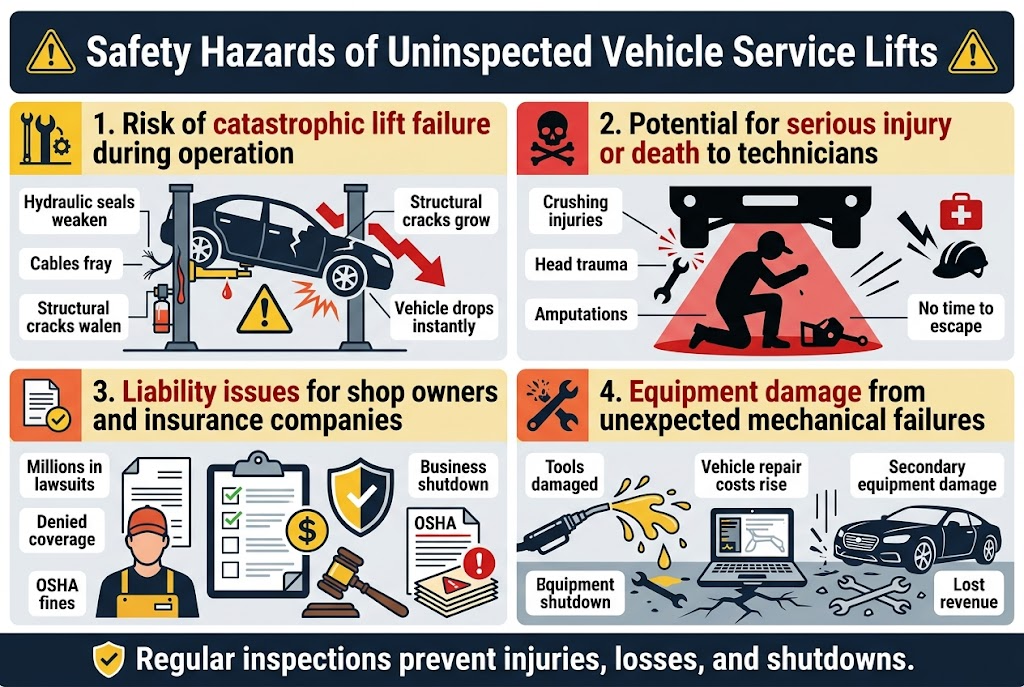
Risk of catastrophic lift failure during operation
Vehicle service lifts operate under tremendous stress, supporting thousands of pounds of weight while technicians work underneath. When these systems aren't regularly inspected, critical components can deteriorate without warning. Hydraulic seals may weaken, cables can fray, and structural elements can develop hairline cracks that grow over time. A sudden failure during operation creates a nightmare scenario where a multi-ton vehicle comes crashing down with devastating force.
The physics are unforgiving - a typical car weighs between 3,000 to 4,000 pounds, while trucks and SUVs can exceed 6,000 pounds. When a lift fails, this massive weight drops instantly, creating impact forces far beyond what the human body can withstand. Even partial failures, where one side of a lift drops while the other holds, can cause vehicles to slide or roll off the platform.
Potential for serious injury or death to technicians
Working beneath a raised vehicle puts technicians in an extremely vulnerable position. Their bodies are directly in the path of danger should anything go wrong. Uninspected lifts dramatically increase the likelihood of life-threatening accidents. Crushing injuries to the torso, head trauma, and severed limbs are common outcomes when lift failures occur.
The confined space beneath a vehicle leaves little room for escape when something goes wrong. Technicians often have their hands full with tools, parts, or fluids, making quick reactions nearly impossible. Even experienced mechanics who recognize warning signs may not have enough time to get clear of the danger zone.
Beyond fatal accidents, serious injuries from lift failures often result in permanent disabilities. Spinal cord damage, traumatic brain injuries, and amputations can end careers and devastate families. These injuries create long-term medical costs and emotional trauma that extend far beyond the initial accident.
Liability issues for shop owners and insurance companies
Shop owners face massive legal exposure when operating uninspected lifts. Personal injury lawsuits from injured employees or customers can reach into the millions, especially when negligence is involved. Failure to maintain proper inspection records creates a paper trail that plaintiff attorneys use to demonstrate gross negligence.
Workers' compensation claims skyrocket when lift accidents occur. Insurance companies scrutinize maintenance records during claim investigations, and inadequate inspection documentation often leads to denied coverage. This leaves business owners personally responsible for medical bills, lost wages, and legal settlements.
OSHA violations compound the legal problems. Federal safety inspectors impose steep fines for uninspected equipment, and repeat violations can force businesses to shut down temporarily. The agency's public database of violations becomes a permanent record that affects business reputation and future insurance rates.
Equipment damage from unexpected mechanical failures
Uninspected lifts don't just endanger people - they threaten expensive vehicles and shop equipment. When hydraulic systems fail catastrophically, pressurized fluid can spray across the work area, damaging nearby tools, computers, and diagnostic equipment. The cleanup costs alone can reach thousands of dollars.
Vehicle damage from lift failures often exceeds the repair bill for the original work. Luxury cars and specialty vehicles can suffer tens of thousands in damage when dropped suddenly. Shop owners typically bear this cost since insurance companies rarely cover damage from improperly maintained equipment.
Secondary equipment damage spreads throughout the shop when accidents occur. Tools get crushed, floor surfaces crack from impact, and overhead systems can be damaged by debris. The ripple effects often force shops to close temporarily while repairs are completed, creating lost revenue that compounds the financial impact.
Legal and Regulatory Compliance Requirements
OSHA Standards for Workplace Safety Equipment
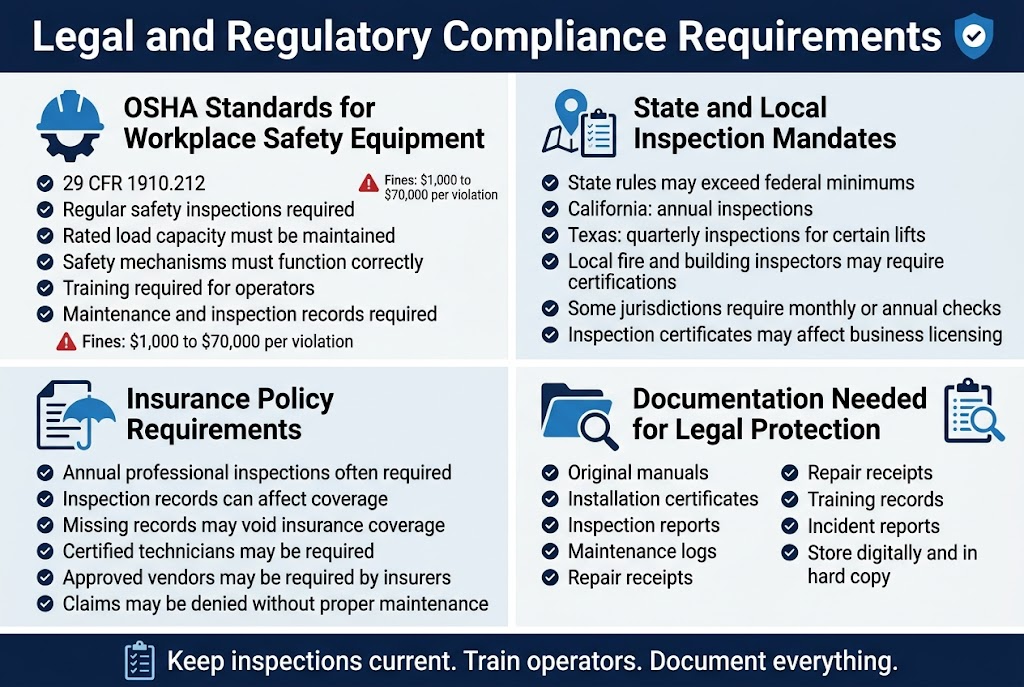
Vehicle service lifts fall under OSHA's strict workplace safety regulations, specifically covered under 29 CFR 1910.212 for general machine guarding requirements. These federal standards mandate that all lifting equipment must maintain proper working condition and undergo regular safety inspections. OSHA requires employers to ensure that mechanical lifting devices can handle their rated loads safely and that all safety mechanisms function correctly.
The Occupational Safety and Health Administration classifies vehicle lifts as mechanical power transmission equipment, which means they must meet specific maintenance and inspection criteria. Failure to comply with these standards can result in hefty fines ranging from $1,000 to $70,000 per violation, depending on the severity and whether the violation is deemed willful or repeat.
OSHA also mandates that employers provide adequate training for workers operating vehicle lifts and maintain detailed records of all safety-related maintenance activities. This includes documentation of inspection dates, findings, repairs, and certifications from qualified technicians.
State and Local Inspection Mandates
Beyond federal OSHA requirements, many states have implemented their own vehicle lift inspection mandates that often exceed federal minimums. California, for example, requires annual inspections for all automotive lifting equipment through CAL/OSHA, while Texas mandates quarterly inspections for certain types of lifts.
Local fire departments and building inspectors frequently have jurisdiction over lift installations and may require periodic safety certifications. These local requirements vary significantly by municipality, with some cities requiring monthly safety checks and others mandating annual professional inspections.
Many states tie lift inspection compliance to business licensing requirements. Auto repair shops, dealerships, and service centers may face license suspension or revocation if they fail to maintain current inspection certificates. Some jurisdictions also require inspection records to be readily available for review during routine business license renewals.
Insurance Policy Requirements for Regular Maintenance
Most commercial general liability insurance policies contain specific clauses requiring regular maintenance and inspection of mechanical equipment, including vehicle lifts. Insurance companies typically mandate annual professional inspections as a condition of coverage, and some require more frequent checks for high-usage equipment.
Failure to maintain proper inspection records can void insurance coverage entirely, leaving business owners personally liable for accidents or injuries. Many insurers offer premium discounts for businesses that exceed minimum inspection requirements or use certified inspection services.
Property insurance policies often require compliance with manufacturer maintenance schedules and may specify that only certified technicians perform inspections. Some insurance companies maintain approved vendor lists for lift inspections and may require pre-approval before accepting inspection reports from other providers.
Workers' compensation insurance frequently includes equipment maintenance requirements, and claims related to lift failures may be denied if proper inspection protocols weren't followed. Insurance adjusters routinely request maintenance records during claim investigations.
Documentation Needed for Legal Protection
Comprehensive documentation serves as your primary defense against liability claims and regulatory violations. Essential records include original equipment manuals, installation certificates, inspection reports, maintenance logs, and repair receipts. These documents should be organized chronologically and stored both digitally and in hard copy format.
Professional inspection reports must include detailed findings, photographic evidence of any defects, technician certifications, and specific recommendations for repairs or replacements. Each report should clearly identify the lift by serial number and installation date, creating an unambiguous maintenance history.
Training records for employees operating lifts are equally important, including initial certification, refresher training dates, and competency assessments. Many successful legal defenses hinge on demonstrating that operators received proper training and that equipment was maintained according to industry standards.
Incident reports, even for minor malfunctions or near-misses, should be documented immediately and retained permanently. These records help establish patterns and demonstrate proactive safety management to regulators and insurance investigators.
Cost Benefits of Regular Lift Inspections
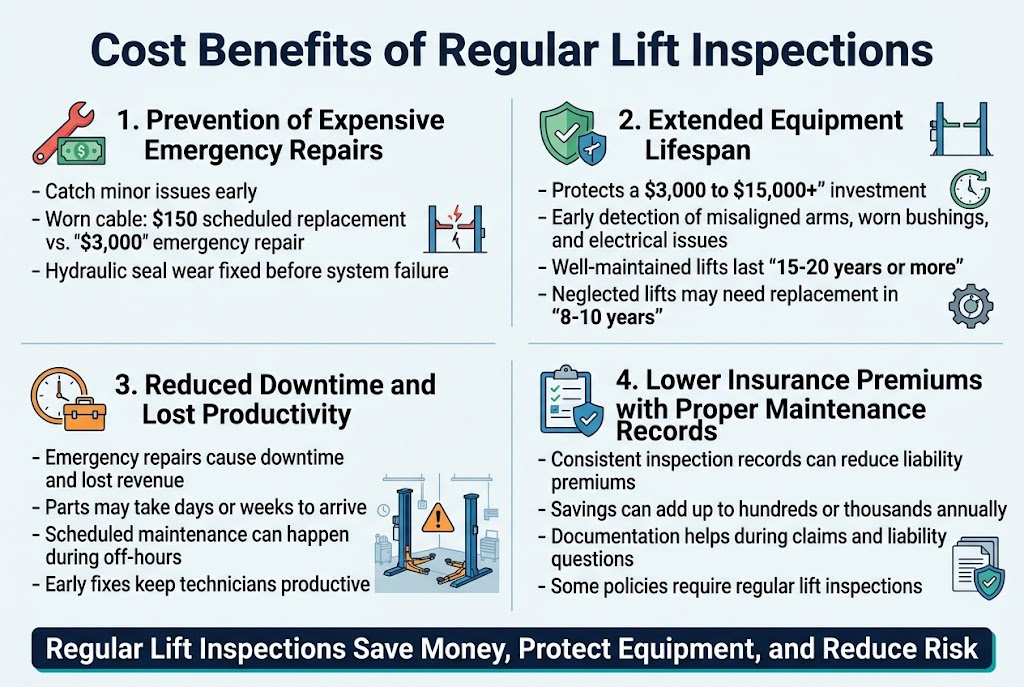
Prevention of expensive emergency repairs
Emergency repairs on vehicle service lifts can easily cost thousands of dollars and often come at the worst possible times. When a lift suddenly fails during operation, you're not just looking at the repair bill – you're dealing with potential damage to vehicles, disruption to your workflow, and possible safety incidents.
Regular inspections catch problems while they're still minor and affordable to fix. A worn cable that costs $150 to replace during scheduled maintenance becomes a $3,000 emergency when it snaps unexpectedly, potentially damaging the lift mechanism and any vehicle on it. Hydraulic seals that show early signs of wear can be replaced for a few hundred dollars, but waiting until they fail completely might require rebuilding the entire hydraulic system.
Extended equipment lifespan through early problem detection
Vehicle service lifts represent a significant investment, often ranging from $3,000 to $15,000 or more depending on the type and capacity. Regular inspections help protect this investment by identifying issues before they cause permanent damage to critical components.
Early detection of problems like misaligned lift arms, worn bushings, or deteriorating electrical connections allows for timely repairs that maintain the lift's structural integrity. A well-maintained lift can operate safely for 15-20 years or more, while neglected equipment might need replacement after just 8-10 years. The inspection process also ensures that lubrication schedules are followed and that components operate within their designed parameters, preventing accelerated wear.
Reduced downtime and lost productivity
Every hour your lift sits broken means lost revenue and frustrated customers. Emergency repairs typically require ordering parts, scheduling technician visits, and potentially waiting days or weeks for specialized components. During this downtime, your shop operates at reduced capacity, and you might need to turn away customers or delay appointments.
Scheduled inspections and maintenance can often be completed during off-hours or slow periods, minimizing disruption to your operations. When problems are caught early, parts can be ordered in advance and repairs scheduled at convenient times. This proactive approach keeps your equipment running smoothly and your technicians productive.
Lower insurance premiums with proper maintenance records
Insurance companies recognize the reduced risk associated with properly maintained equipment. Many carriers offer discounts on liability premiums when you can demonstrate a consistent inspection and maintenance program for your vehicle lifts. These savings can add up to hundreds or thousands of dollars annually, depending on your policy and the size of your operation.
Proper documentation also protects you in case of accidents or insurance claims. Detailed inspection records show that you've taken reasonable precautions to maintain safe working conditions, which can be valuable if liability questions arise. Some insurance policies actually require regular lift inspections as a condition of coverage, making this maintenance essential for maintaining your protection.
Key Components That Require Professional Inspection
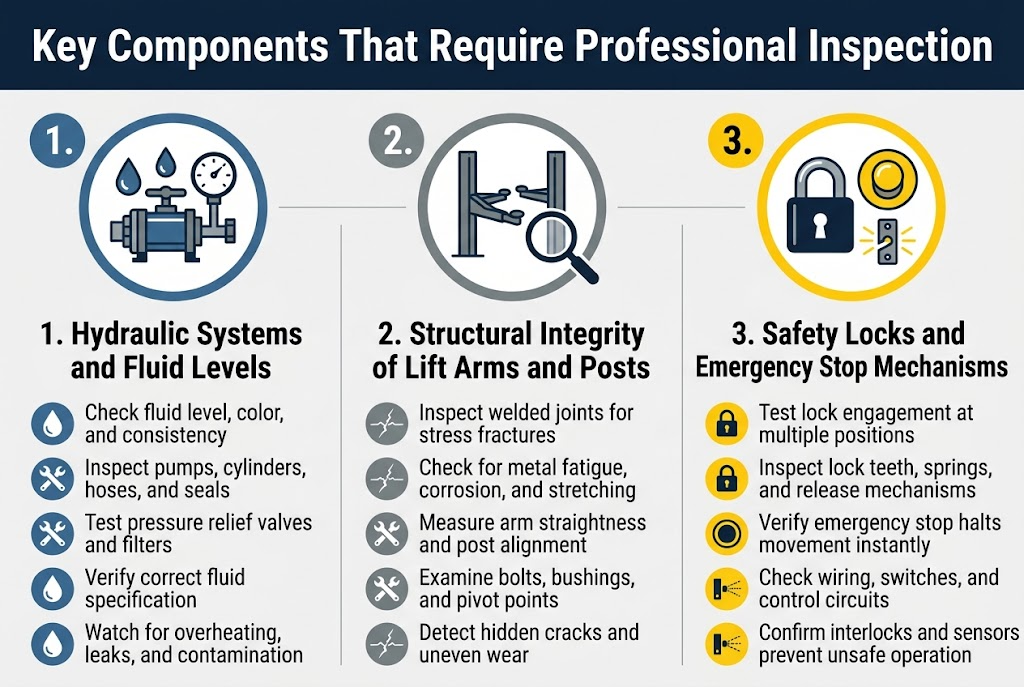
Hydraulic Systems and Fluid Levels
The hydraulic system forms the heart of your vehicle service lift, requiring meticulous attention during professional inspections. Hydraulic fluid serves as the lifeblood that powers lift operations, and its condition directly impacts both performance and safety. Professional inspectors examine fluid levels, color, and consistency to identify potential contamination or degradation that could compromise lifting capacity.
Hydraulic pumps, cylinders, and hoses undergo thorough evaluation for wear patterns, seal integrity, and pressure retention. Even minor leaks can escalate into catastrophic failures when lifts are under load. Inspectors test pressure relief valves and check hydraulic filters for blockages that might restrict fluid flow. They also verify that hydraulic fluid meets manufacturer specifications, as using incorrect fluid types can damage seals and reduce system efficiency.
Temperature variations affect hydraulic performance, so inspectors assess how systems respond under different operating conditions. They look for signs of overheating, which often manifest as burnt fluid odors or discolored components. Regular hydraulic system inspections prevent unexpected breakdowns that could leave vehicles stranded mid-lift, creating dangerous situations for technicians working underneath.
Structural Integrity of Lift Arms and Posts
The structural components of vehicle service lifts bear tremendous stress with each lifting cycle, making regular inspection absolutely critical for workshop safety. Lift posts endure constant vertical loads while arms experience both weight distribution and lateral forces as vehicles are positioned and repositioned during service operations.
Professional inspectors examine all welded joints for stress fractures, particularly at connection points where arms attach to posts. These high-stress areas are prone to fatigue cracking that may not be visible during casual observation. They use specialized tools to detect hairline fractures that could propagate under load, potentially causing sudden structural failure.
Metal fatigue becomes a serious concern as lifts age, especially in high-volume shops where equipment operates continuously. Inspectors check for signs of metal stretching, unusual wear patterns, and corrosion that might weaken structural integrity. They measure arm straightness and verify that posts remain properly aligned, as misalignment can create uneven stress distribution.
The inspection process includes checking all bolted connections for proper torque specifications and examining bushings or pivot points for excessive play. Even minor structural defects can compromise the lift's ability to safely support vehicles, making professional structural assessment essential for preventing workplace accidents.
Safety Locks and Emergency Stop Mechanisms
Safety locks represent the last line of defense against catastrophic lift failures, making their proper function absolutely vital for technician safety. These mechanical backup systems must engage reliably every time the lift operates, providing fail-safe protection if hydraulic systems malfunction or lose pressure unexpectedly.
Professional inspectors test safety lock engagement at multiple lift positions, ensuring locks activate smoothly without binding or hesitation. They examine lock teeth for wear, damage, or deformation that might prevent proper engagement. Lock springs and release mechanisms undergo careful evaluation to verify they meet manufacturer specifications for engagement force and timing.
Emergency stop systems require comprehensive testing to confirm immediate response when activated. Inspectors verify that emergency stops halt all lift movement instantly and that reset procedures work correctly. They check wiring connections, switch integrity, and control circuit functionality to prevent situations where emergency systems might fail during critical moments.
Safety interlock systems, including door sensors and platform presence detectors, receive thorough evaluation to ensure they prevent accidental lift operation when personnel are in danger zones. These sophisticated safety features work together to create multiple layers of protection, but only when properly maintained and regularly inspected by qualified professionals who understand their critical importance in preventing serious injuries.
Signs That Indicate Immediate Inspection is Needed
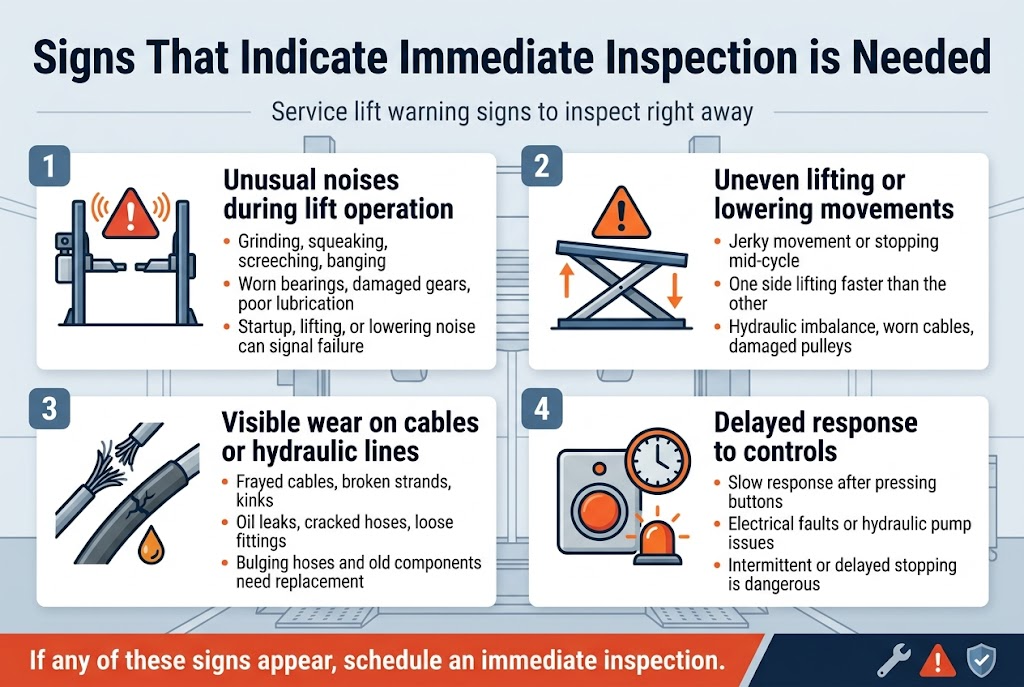
Unusual noises during lift operation
Your vehicle service lift should operate smoothly and quietly during normal use. When you start hearing grinding, squeaking, screeching, or banging sounds, something's wrong. These noises often point to worn bearings, damaged gears, or components that need lubrication. Metal-on-metal contact creates grinding sounds that can quickly escalate into major mechanical failures. Squeaking typically comes from worn bushings or inadequate lubrication in moving parts. Banging or clunking noises during operation suggest loose bolts, damaged lift chains, or hydraulic system issues.
Pay attention to when these sounds occur. Noises during startup might signal hydraulic pump problems, while sounds during lifting or lowering could mean structural wear. Don't ignore intermittent noises either - they often become constant problems that lead to expensive repairs or safety hazards.
Uneven lifting or lowering movements
A properly functioning lift moves vehicles up and down smoothly and evenly. When you notice jerky movements, stopping mid-cycle, or one side lifting faster than the other, schedule an inspection right away. Uneven lifting puts dangerous stress on your vehicle and creates serious safety risks for anyone working underneath.
Hydraulic system imbalances cause most uneven lifting problems. Low fluid levels, contaminated hydraulic oil, or worn cylinders create pressure differences that affect lift performance. Mechanical issues like worn cables, damaged pulleys, or misaligned components also cause uneven movement patterns.
Watch for vehicles that tilt during lifting or seem unstable once raised. These symptoms often precede complete lift failures that can damage vehicles or injure technicians.
Visible wear on cables or hydraulic lines
Regular visual inspection of cables and hydraulic lines helps catch problems before they become dangerous. Look for frayed cables, broken wire strands, or cables that appear stretched or kinked. Steel cables under constant tension eventually show wear patterns that compromise their strength. Even small nicks or cuts in cable housings can lead to sudden failures.
Hydraulic lines deserve equal attention. Check for oil leaks, cracked hoses, loose fittings, or lines that show signs of rubbing against other components. Hydraulic fluid on the floor around your lift signals potential line problems that need immediate attention. Bulging hoses indicate internal pressure issues that could cause sudden ruptures.
Age matters too - cables and hydraulic lines have recommended replacement intervals regardless of their appearance. Old components fail without warning, even when they look fine.
Delayed response to controls
Your lift controls should respond immediately when you press buttons or operate switches. Delays between pressing controls and lift movement suggest several potential problems. Electrical issues like worn contactors, corroded connections, or failing relays cause sluggish response times. Hydraulic problems such as worn pumps, contaminated fluid, or internal leaks also create delayed reactions.
Notice if delays worsen over time or happen consistently during specific operations. Controls that work sometimes but not others often indicate intermittent electrical connections that need attention. Delayed stopping responses are particularly dangerous since they affect your ability to control the lift precisely during critical moments.
Temperature changes sometimes reveal control problems that aren't obvious during moderate weather. Cold weather can make hydraulic fluid thicker and electrical connections less reliable, while heat can cause components to expand and create different operational characteristics.
In Conclusion:
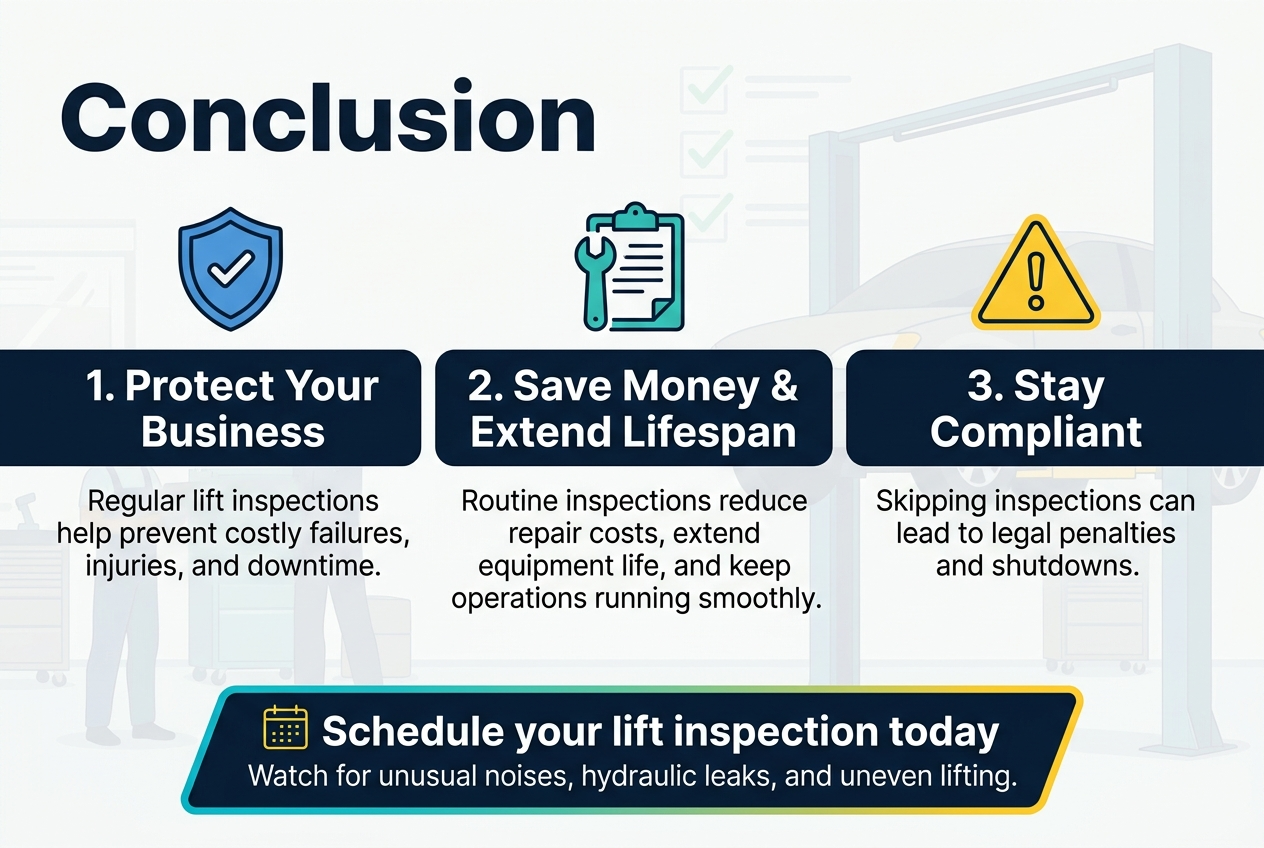
Key Takeaways
- Safety risks are severe: Uninspected lifts can fail catastrophically under thousands of pounds of vehicle weight, putting technicians at risk of crushing injuries, fatalities, and permanent disabilities.
- Legal and regulatory consequences are significant: OSHA fines can reach $70,000 per violation, and many states have their own inspection mandates tied to business licensing — skipping inspections can also void insurance coverage entirely.
- Regular inspections save money: Catching small issues early (like a $150 worn cable) prevents them from becoming thousands in emergency repairs, and well-maintained lifts can last 15–20 years versus 8–10 for neglected ones.
- Key components need professional attention: Hydraulic systems, structural lift arms and posts, and safety locks/emergency stops all require expert evaluation that goes beyond what a casual visual check can catch.
- Watch for these warning signs: Unusual noises, uneven lifting, visible cable or hose wear, and delayed control response all signal that an immediate inspection is needed before a serious failure occurs.
Regular lift inspections aren't just about following rules – they're about protecting your business, your employees, and your bottom line. When you skip these crucial safety checks, you're gambling with expensive equipment failures, potential injuries, and hefty legal penalties that could shut down your operation. The small investment in routine inspections pays for itself by preventing catastrophic breakdowns, extending your lift's lifespan, and keeping your shop running smoothly.
Don't wait for warning signs like unusual noises, hydraulic leaks, or uneven lifting to force your hand. That's where ODP's digital lift inspection program comes in — making it easier than ever to schedule, track, and document your inspections all in one place. With digital records instantly accessible and automatic reminders keeping you on schedule, staying compliant has never been simpler. Schedule your lift inspection today and make it a regular part of your maintenance routine. Your team's safety depends on it, and your business will thank you for the peace of mind that comes with knowing your equipment is operating at peak performance.