Is a Portable Lift Like the Nussbaum Sprinter 7 Worth It for Your Shop?
If you're running a busy shop and space or budget is always a juggling act, you've probably wondered whether a portable lift could actually pull its weight. The Nussbaum Sprinter 7 keeps coming up in those conversations — and for good reason.
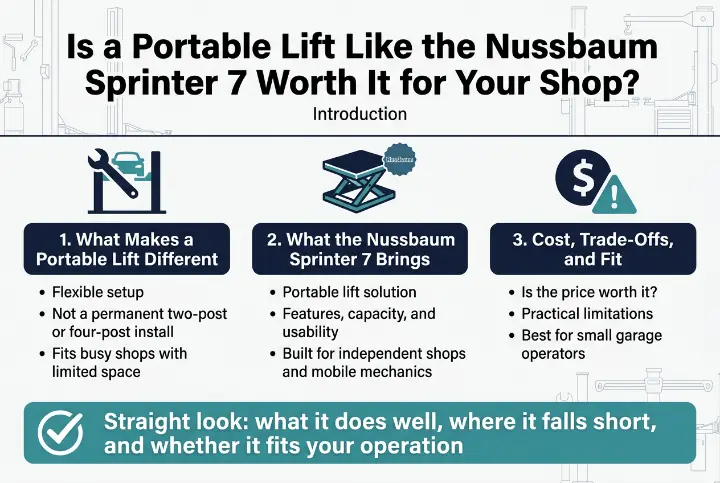
This guide is written for independent shop owners, mobile mechanics, and small garage operators who want a flexible lifting solution without committing to a permanent two-post or four-post setup.
Here's what we'll walk through:
- What sets a portable lift apart from a traditional shop lift and why that difference matters day-to-day
- What the Nussbaum Sprinter 7 specifically brings to the table — features, capacity, and real-world usability
- Whether the cost and trade-offs make sense for your setup, including the practical limitations you'll want to know before you spend a dollar
No fluff, no sales pitch — just a straight look at what this lift does well, where it falls short, and how to figure out if it's the right call for your operation.
What Makes a Portable Lift Different from a Traditional Shop Lift
Freedom to Move the Lift Anywhere in Your Workspace
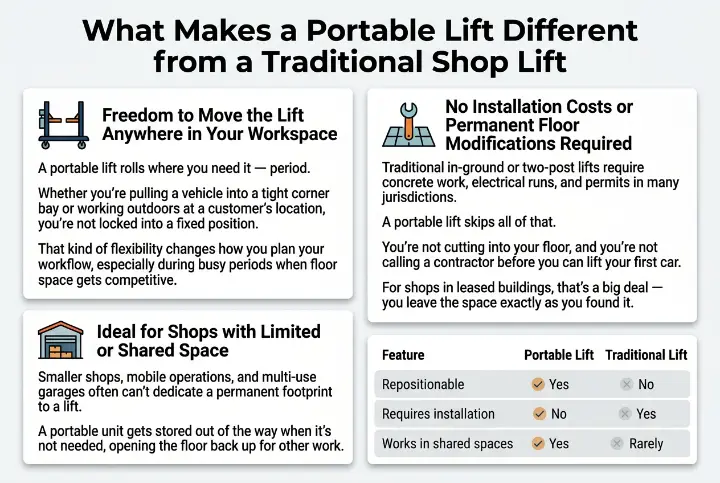
A portable lift rolls where you need it — period. Whether you're pulling a vehicle into a tight corner bay or working outdoors at a customer's location, you're not locked into a fixed position. That kind of flexibility changes how you plan your workflow, especially during busy periods when floor space gets competitive.
No Installation Costs or Permanent Floor Modifications Required
Traditional in-ground or two-post lifts require concrete work, electrical runs, and permits in many jurisdictions. A portable lift skips all of that. You're not cutting into your floor, and you're not calling a contractor before you can lift your first car. For shops in leased buildings, that's a big deal — you leave the space exactly as you found it.
Ideal for Shops with Limited or Shared Space
Smaller shops, mobile operations, and multi-use garages often can't dedicate a permanent footprint to a lift. A portable unit gets stored out of the way when it's not needed, opening the floor back up for other work. Consider how the two options compare:
| Feature | Portable Lift | Traditional Lift |
| Repositionable | Yes | No |
| Requires installation | No | Yes |
| Works in shared spaces | Yes | Rarely |
Key Features of the Nussbaum Sprinter 7 Worth Knowing
Weight Capacity and Vehicle Compatibility
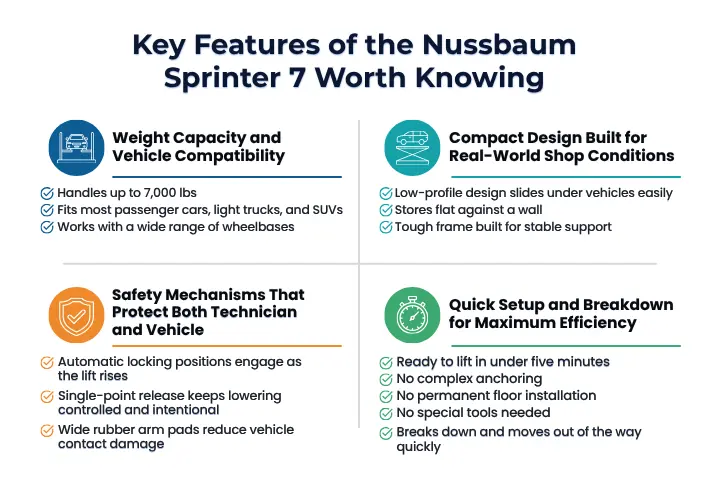
The Sprinter 7 handles up to 7,000 lbs, which covers most passenger cars, light trucks, and SUVs without breaking a sweat. It works with a wide range of vehicle wheelbases, making it genuinely useful across a mixed workload rather than just for one vehicle type.
Compact Design Built for Real-World Shop Conditions
The low-profile design slides under vehicles easily, and the whole unit stores flat against a wall when not in use. For shops where every square foot counts, that's a real advantage. The frame is built tough — this isn't a piece of equipment that wobbles or flexes under load.
Safety Mechanisms That Protect Both Technician and Vehicle
- Automatic locking positions engage as the lift rises, preventing accidental descent
- Single-point release keeps the lowering process controlled and intentional
- Wide rubber arm pads reduce the risk of vehicle contact damage
Quick Setup and Breakdown for Maximum Efficiency
Most technicians get the Sprinter 7 positioned and ready to lift in under five minutes. There's no complex anchoring, no permanent floor installation, and no special tools needed. When the job is done, it breaks down and moves out of the way just as fast.
Types of Shops That Benefit Most from a Portable Lift
Tire Dealers with Limited Bays
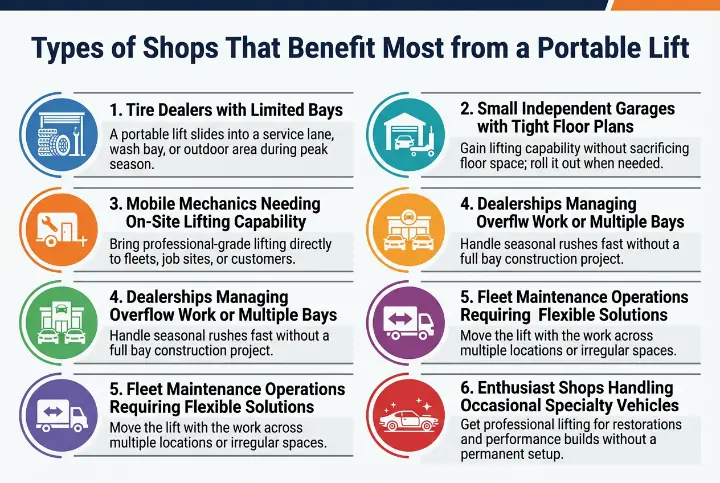
Tight on bays but heavy on volume? A portable lift slides in where a fixed lift simply can't. You can set it up in a service lane, a wash bay, or even outside during peak season without committing that space permanently.
Small Independent Garages with Tight Floor Plans
When every square foot counts, a portable lift gives you lifting capability without stealing real estate. Park it against the wall when it's not in use and roll it out when you need it.
Mobile Mechanics Needing On-Site Lifting Capability
Some jobs can't come to the shop. A portable lift loaded in a trailer brings professional-grade lifting directly to fleets, job sites, or customers who can't easily move their vehicles.
Dealerships Managing Overflow Work or Multiple Bays
Seasonal rushes happen. A portable lift absorbs that overflow without requiring a full bay construction project. It's a fast, cost-effective way to add capacity right now.
Fleet Maintenance Operations Requiring Flexible Solutions
Fleet garages often work across multiple locations or irregular spaces. A portable lift moves with the work rather than forcing the work to come to a fixed point.
Enthusiast Shops Handling Occasional Specialty Vehicles
Low-volume doesn't mean low-need. Shops doing occasional restorations or performance builds get professional lifting without the permanent footprint or price tag of a traditional two-post setup.
Cost Considerations Before You Invest
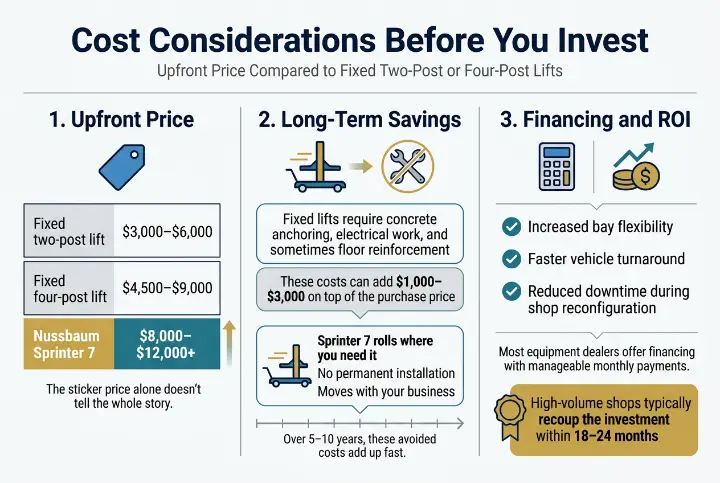
Upfront Price Compared to Fixed Two-Post or Four-Post Lifts
The Nussbaum Sprinter 7 typically runs higher than a comparable fixed two-post lift. Here's a rough breakdown:
| Lift Type | Typical Price Range |
| Fixed two-post lift | $3,000–$6,000 |
| Fixed four-post lift | $4,500–$9,000 |
| Nussbaum Sprinter 7 | $8,000–$12,000+ |
That gap is real, but the sticker price alone doesn't tell the whole story.
Long-Term Savings on Installation and Relocation Costs
Fixed lifts require concrete anchoring, electrical work, and sometimes floor reinforcement — costs that can easily add $1,000–$3,000 on top of the purchase price. If you ever move shops or reorganize your floor layout, you're starting over.
The Sprinter 7 rolls where you need it, requires no permanent installation, and moves with your business. Over 5–10 years, those avoided costs add up fast.
Financing Options and Return on Investment for Busy Shops
Most equipment dealers offer financing with manageable monthly payments. For a shop running consistent volume, the Sprinter 7 can pay for itself through:
- Increased bay flexibility
- Faster vehicle turnaround
- Reduced downtime during shop reconfiguration
High-volume shops typically recoup the investment within 18–24 months.
Practical Limitations to Consider Before Buying
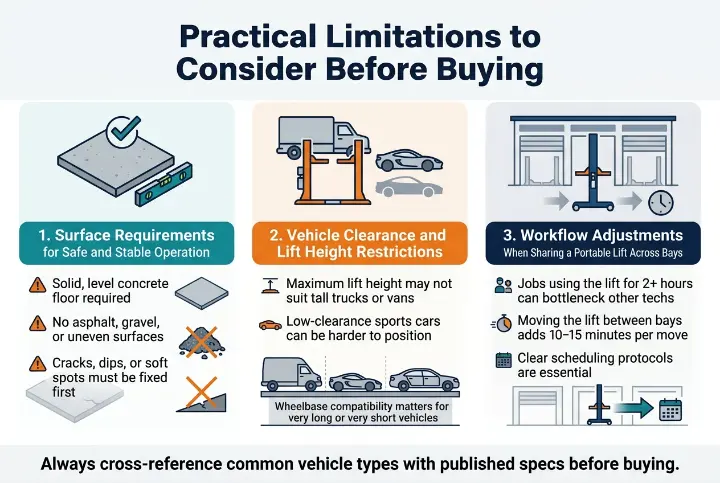
Surface Requirements for Safe and Stable Operation
The Nussbaum Sprinter 7 needs a solid, level concrete floor to work safely. Asphalt, gravel, or uneven surfaces are a hard no. Even minor floor slopes can affect stability under load, so if your shop floor has cracks, dips, or soft spots, those need addressing before you roll this lift in.
Vehicle Clearance and Lift Height Restrictions
Portable lifts trade some reach for flexibility. Key things to check:
- Maximum lift height may fall short for tall trucks or vans needing undercarriage access at comfortable standing height
- Low-clearance vehicles like sports cars can be tricky to position correctly on the runways
- Wheelbase compatibility matters — very long or very short vehicles may not center well on the lift platform
Always cross-reference your most common vehicle types against the lift's published specs before buying.
Workflow Adjustments When Sharing a Portable Lift Across Bays
One lift shared among multiple techs sounds great on paper, but in practice it creates scheduling friction. A few honest realities:
- Jobs requiring the lift for 2+ hours will bottleneck other techs
- Moving the lift between bays adds setup time (10–15 minutes per move)
- Clear scheduling protocols are a must, not an afterthought
How to Decide If the Nussbaum Sprinter 7 Fits Your Operation
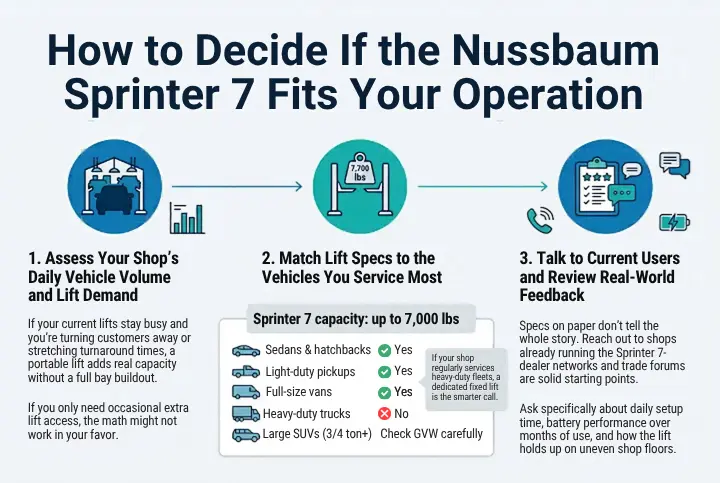
Assessing Your Shop's Daily Vehicle Volume and Lift Demand
Think about how many vehicles move through your bays each day. If your current lifts stay busy and you're turning customers away or stretching turnaround times, a portable lift adds real capacity without a full bay buildout. If you only need occasional extra lift access, the math might not work in your favor.
Matching Lift Specs to the Vehicles You Service Most
The Sprinter 7 handles vehicles up to roughly 7,000 lbs, which covers most passenger cars, light trucks, and vans. Before buying, cross-check your most common vehicles against:
| Vehicle Type | Compatible? |
| Sedans & hatchbacks | ✅ Yes |
| Light-duty pickups | ✅ Yes |
| Full-size vans | ✅ Yes |
| Heavy-duty trucks | ❌ No |
| Large SUVs (3/4 ton+) | Check GVW carefully |
If your shop regularly services heavy-duty fleets, a dedicated fixed lift is the smarter call.
Talking to Current Users and Reviewing Real-World Feedback
Specs on paper don't tell the whole story. Reach out to shops already running the Sprinter 7—dealer networks and trade forums are solid starting points. Ask specifically about daily setup time, battery performance over months of use, and how the lift holds up on uneven shop floors.
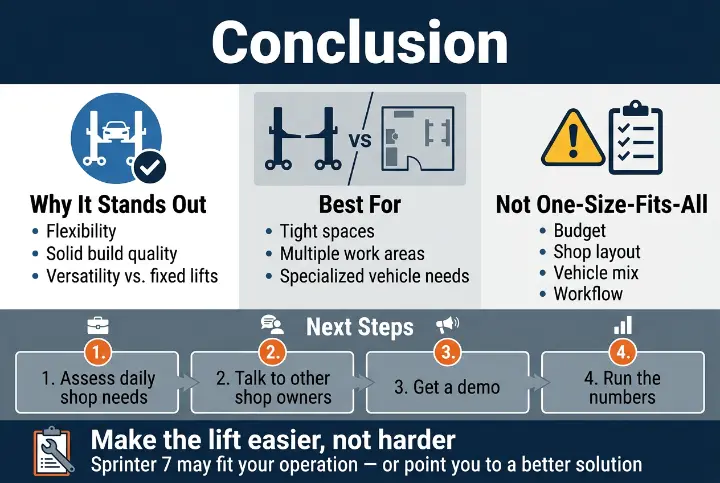
The Nussbaum Sprinter 7 brings a lot to the table — flexibility, solid build quality, and the kind of versatility that fixed lifts simply can't match. For shops dealing with tight spaces, multiple work areas, or specialized vehicle needs, a portable lift can genuinely change the way the day runs. That said, it's not a one-size-fits-all solution. Budget, shop layout, vehicle mix, and workflow all play a role in whether it makes sense for your specific setup.
If you've been on the fence, the best next step is an honest look at what your shop actually needs day-to-day. Talk to other shop owners who've made the switch, get a demo if you can, and run the numbers against your current setup. A lift is a long-term investment, and the right one should make your team's work easier, not complicate it. The Sprinter 7 might be exactly what your operation has been missing — or it might point you toward a different solution altogether. Either way, now you have a clearer picture of what to look for.