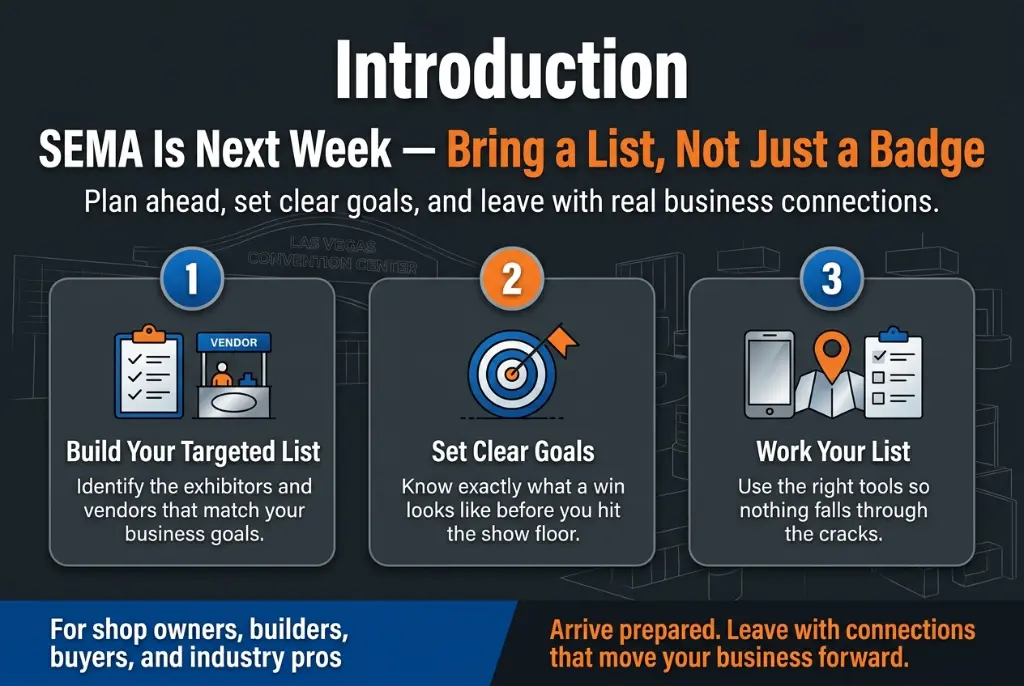
SEMA week hits hard and fast. If you show up without a plan, you'll spend three days walking in circles, collecting catalogs you'll never read, and leaving without the connections that actually move your business forward.
This SEMA guide is for shop owners, builders, buyers, and anyone heading to the Las Vegas Convention Center.
Here’s what this SEMA guide covers: how to build a targeted vendor and exhibitor list before you ever leave home, how to set clear goals so you know exactly what a win looks like on the show floor, and how to work your list with the right tools so nothing falls through the cracks.
Let's get into it.
SEMA Guide Basics: Why a List Makes or Breaks Your Show
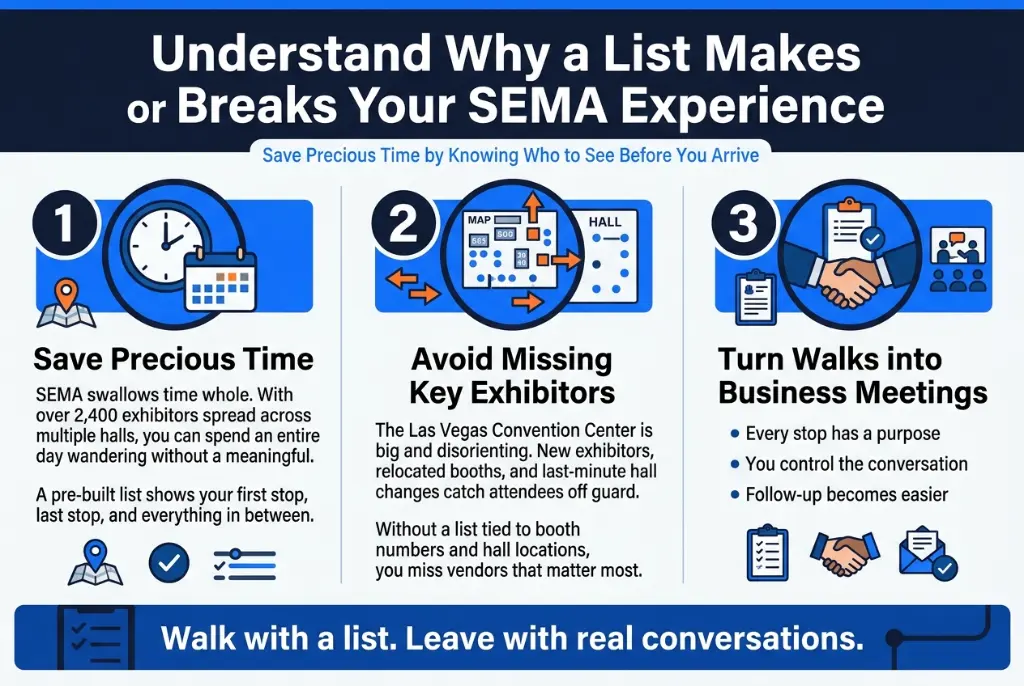
The First Rule of Any SEMA Guide: Know Who to See Before You Arrive
SEMA swallows time whole. With over 2,400 exhibitors spread across multiple halls, you can burn an entire day wandering without landing a single meaningful conversation. A pre-built list cuts that waste immediately — you know your first stop at 9 AM, your last stop before dinner, and everything in between.
Avoid Missing Key Exhibitors in the Massive Las Vegas Convention Center
The Las Vegas Convention Center isn't just big — it's disorienting. New exhibitors, relocated booths, and last-minute hall changes catch unprepared attendees off guard every year. Without a list tied to booth numbers and hall locations, you'll miss vendors that matter most to your business simply because you didn't know where to look.
Turn Casual Walks into Purposeful Business Meetings
Walking the floor without a list turns SEMA into a spectator sport. You admire products, collect catalogs, grab free pens — and go home with nothing actionable. A solid list flips that dynamic entirely:
- Every stop has a purpose — a product to evaluate, a deal to discuss, a relationship to build
- You control the conversation — arriving prepared signals professionalism
- Follow-up becomes easier — you already know who you met and why
Build Your Must-See Vendor and Exhibitor List
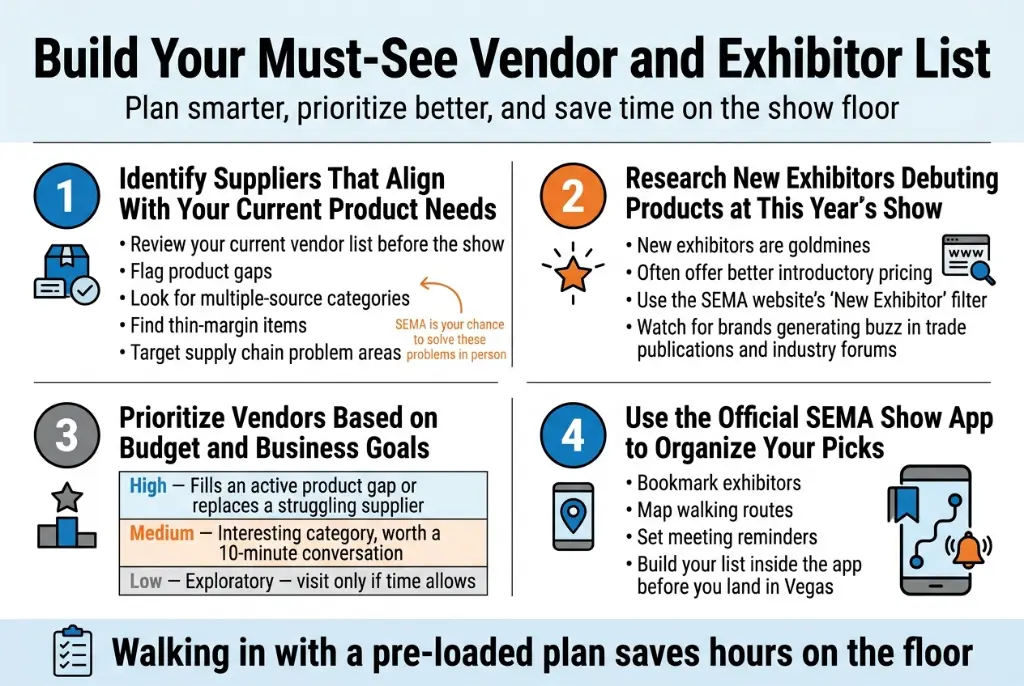
Identify Suppliers That Align With Your Current Product Needs
Pull up your current vendor list before the show and flag gaps — products you're sourcing from multiple places, categories where margins are thin, or items with supply chain headaches. SEMA is your chance to solve those problems in person.
Research New Exhibitors Debuting Products at This Year's Show
New exhibitors are goldmines. They're hungry for buyers and often offer better introductory pricing. Check the SEMA website's "New Exhibitor" filter and look for brands generating buzz in trade publications or on industry forums leading up to the show.
Prioritize Vendors Based on Budget and Business Goals
Not every booth deserves equal time. Rank your list using a simple framework:
| Priority | Criteria |
| High | Fills an active product gap or replaces a struggling supplier |
| Medium | Interesting category, worth a 10-minute conversation |
| Low | Exploratory — visit only if time allows |
Use the Official SEMA Show App to Organize Your Picks
The SEMA Show app lets you bookmark exhibitors, map walking routes, and set meeting reminders. Build your list inside the app before you land in Vegas — walking in with a pre-loaded plan saves hours on the floor.
Set Clear Business Goals Before You Walk the Floor
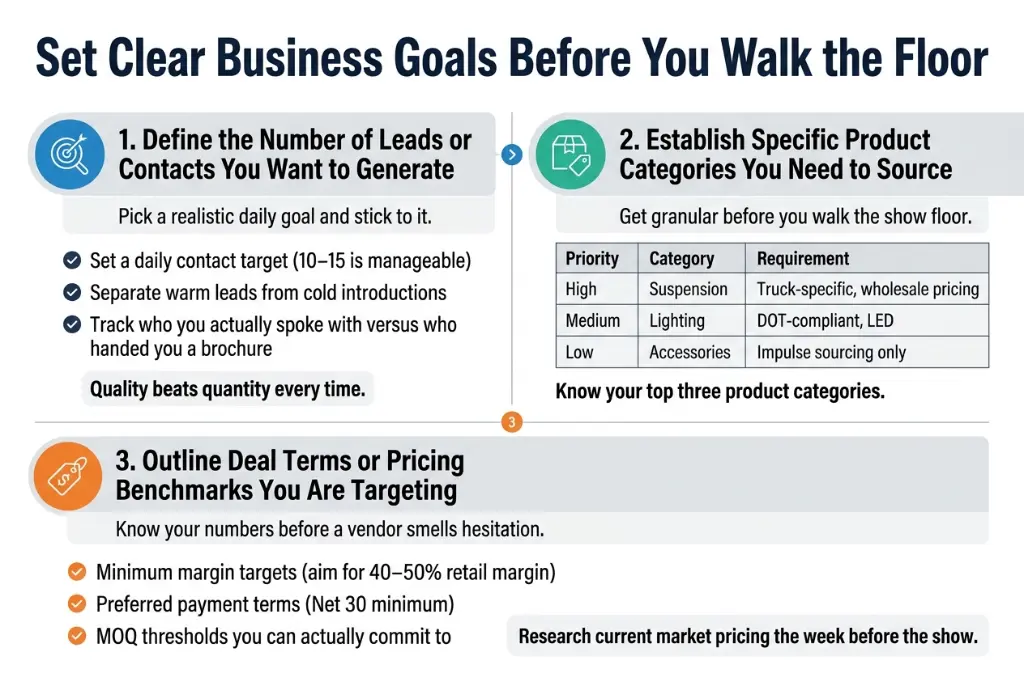
Define the Number of Leads or Contacts You Want to Generate
Walking SEMA without a target number is like fishing without knowing what you want to catch. Pick a realistic daily goal — say, 10 qualified conversations — and stick to it. Quality beats quantity every time.
- Set a daily contact target (10–15 is manageable)
- Separate warm leads from cold introductions
- Track who you actually spoke with versus who handed you a brochure
Establish Specific Product Categories You Need to Source
Get granular here. "Suspension parts" is too vague. "Coilover kits for late-model trucks under $800 wholesale" gives you a filter. Walk in knowing your top three product categories so you stop getting distracted by shiny objects.
| Priority | Category | Requirement |
| High | Suspension | Truck-specific, wholesale pricing |
| Medium | Lighting | DOT-compliant, LED |
| Low | Accessories | Impulse sourcing only |
Outline Deal Terms or Pricing Benchmarks You Are Targeting
Know your numbers before a vendor smells hesitation. Research current market pricing the week before the show.
- Minimum margin targets (aim for 40–50% retail margin)
- Preferred payment terms (Net 30 minimum)
- MOQ thresholds you can actually commit to
Prepare the Right Tools to Work Your List Effectively
Bring Enough Business Cards to Exchange With Every Contact
Pack more cards than you think you'll need — double your estimate. SEMA moves fast, and running out mid-show means missed connections. Keep a stack in every pocket, your badge holder, and your bag.
Use a Note-Taking System to Capture Key Conversations on the Spot
Don't trust your memory after eight hours on a packed show floor. Pick one system and stick to it:
- Voice memos — quick, hands-free, captures tone and details
- Notes app — easy to search later
- Physical notepad — never crashes, never needs charging
Jot the person's name, what they said that mattered, and your next step — right after the conversation ends.
Schedule Follow-Up Reminders During the Show While Details Are Fresh
Set calendar reminders during lunch breaks or quiet moments — not after you're home and exhausted. A 48-hour window is where most deals die because nobody followed up first.
Carry a Printed Backup of Your List in Case Technology Fails
Dead battery. No signal. Dropped phone. Any of these can wipe out your game plan mid-day.
| Backup Type | Why It Works |
| Printed vendor list | Always accessible |
| Laminated schedule | Survives spills |
| Highlighted priorities | Keeps you focused fast |
Maximize Networking Opportunities Beyond the Show Floor
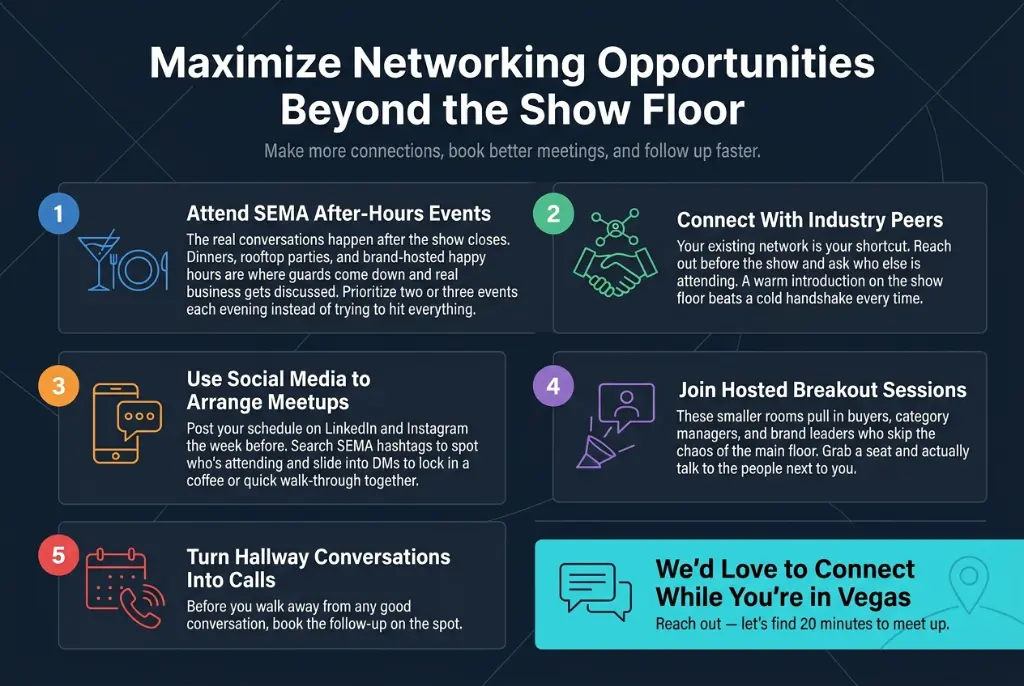
Attend SEMA After-Hours Events Where Deals Often Get Done
The real conversations happen after the show closes. Dinners, rooftop parties, and brand-hosted happy hours are where guards come down and real business gets discussed. Prioritize two or three events each evening instead of trying to hit everything.
Connect With Industry Peers Who Can Introduce You to the Right People
Your existing network is your shortcut. Reach out before the show and ask who else is attending. A warm introduction on the show floor beats a cold handshake every time.
Leverage Social Media to Arrange Meetups With Contacts in Advance
Post your schedule on LinkedIn and Instagram the week before. Search SEMA hashtags to spot who's attending and slide into DMs to lock in a coffee or quick walk-through together.
Join Hosted Breakout Sessions That Attract Decision Makers in Your Niche
These smaller rooms pull in buyers, category managers, and brand leaders who skip the chaos of the main floor. Grab a seat and actually talk to the people next to you.
Turn Hallway Conversations Into Scheduled Post-Show Calls
Before you walk away from any good conversation, book the follow-up on the spot.
We'd Love to Connect While You're in Vegas
Reach out — let's find 20 minutes to meet up.
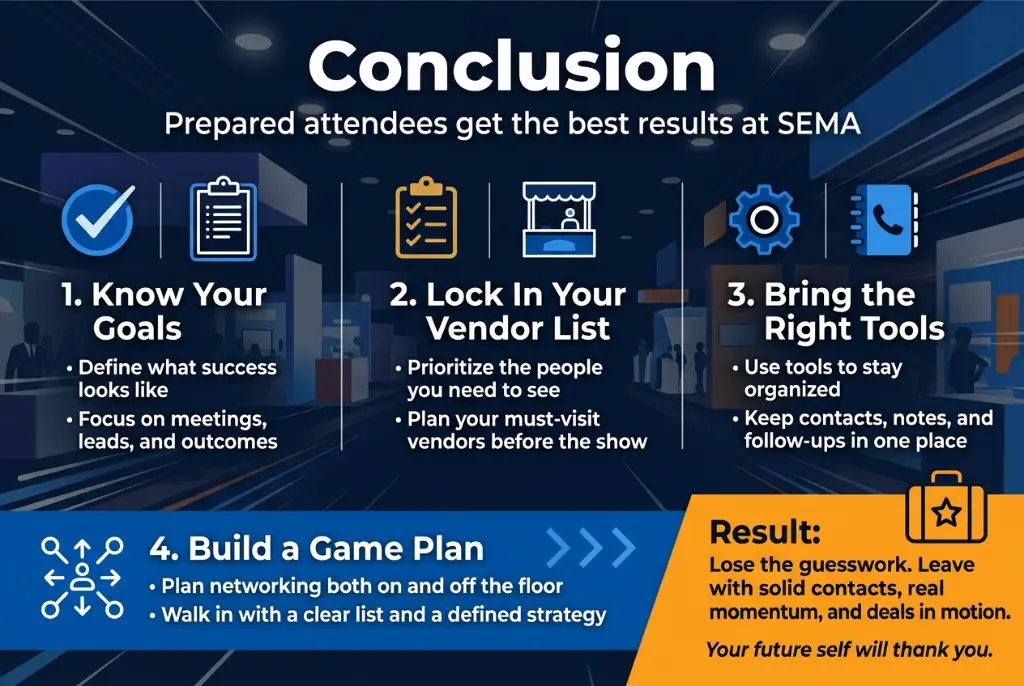
SEMA is one of those events that can either leave you fired up with new connections and deals in motion, or have you walking back to your car Thursday afternoon wondering where the week went. The difference almost always comes down to how prepared you were before you even stepped through the doors. Knowing your goals, having your vendor list locked in, and bringing the right tools to stay organized puts you miles ahead of the crowd that just showed up with a badge and a vague plan.
The show is massive, the energy is electric, and the distractions are everywhere. But if you walk in with a clear list, defined goals, and a game plan for networking both on and off the floor, you will get more done in four days than most people accomplish in a dozen industry events combined. So before next week hits, use this SEMA guide to build your list, sharpen your goals, and get your tools ready. Your future self will thank you when you are back home with a stack of solid contacts and actual momentum instead of a bag full of brochures you will never read.